


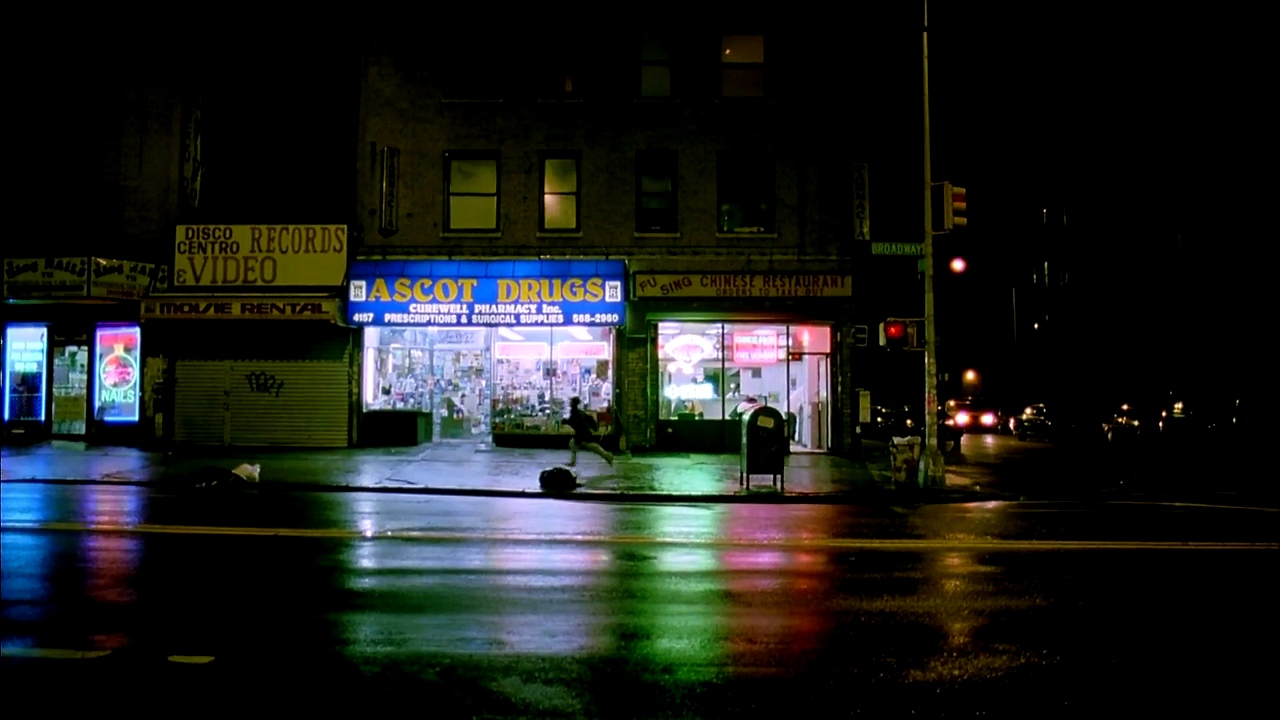


Chaque mois sur Kiosk Radio et Critikat, un.e invité.e partage ses bandes-son de films favorites et ses souvenirs cinéphiles. Luna Mahoux, alias Renoiterrible, est artiste, cinéaste et DJ.
SUD BY CHANTAL AKERMAN
00′00″ ♪ Sound excerpt
Quand j’ai vu Sud de Chantal Akerman, je crois que cela m’a fait du bien de voir une cinéaste belge faire un documentaire sur une histoire qui ne lui appartient pas, et de voir comment elle y place son regard et son esprit. Au début du documentaire, je n’arrêtais pas de penser que les meilleurs films, et les meilleurs documentaires, sont ceux qui n’ont pas de musique. Il faut être vraiment fort pour ne pas avoir besoin de musique pour nous guider vers certaines émotions. La musique dans un film n’est jamais complètement neutre. Et les premiers plans, sans musique, simplement avec les différents sons de la nature, les grillons, les voitures… On ressent la chaleur, on comprend qu’on est dans le Sud, qu’il fait chaud. On entend les voitures et, surtout à travers ce silence, on comprend que ces paysages et cette route ne sont pas neutres.
When I watched South by Chantal Akerman, I think it did me good to see a Belgian filmmaker go and make a documentary about a story that doesn’t belong to her, and to see how she places her gaze and her mind within it. At the beginning of the documentary, I kept thinking that the best films, and the best documentaries, are the ones without music. You have to be really strong not to need music to lead you towards certain emotions. Music in a film isn’t completely neutral. And the first shots, without music, just with the different sounds of nature, the crickets, the cars… You feel the heat, you understand that you’re in the South, that it’s hot. You hear the cars, and especially through that silence, you understand that these landscapes and this road are not neutral.
MALCOLM X BY SPIKE LEE
01′15″ ♪ Terence Blanchard — Young Malcolm
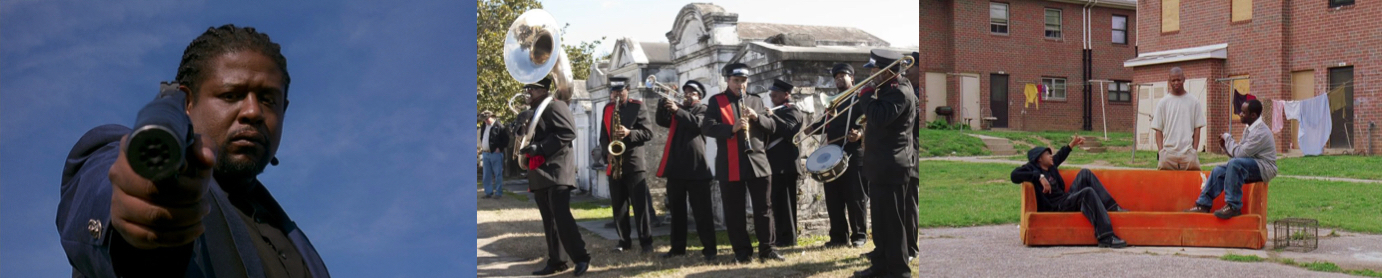
Malcolm X (1992), avec Denzel Washington dans le rôle principal, raconte la vie de Malcolm X, de son enfance et son emprisonnement jusqu’à sa transformation politique et spirituelle et son engagement pour la libération des Noirs. La musique, composée par Terence Blanchard et accompagnée de morceaux additionnels de Black music, donne encore plus de puissance au film.
Spike Lee est vraiment l’un de mes cinéastes préférés. Il possède cette sorte de magie qui permet de comprendre les histoires de l’intérieur. Il a aussi cette capacité à s’adresser directement à nous. On peut l’entendre derrière la caméra, derrière ses choix musicaux, derrière les histoires qu’il choisit.
Il a cette capacité à rassembler les gens. C’est un exemple formidable de ce que peut être le cinéma populaire. On peut regarder ses films en famille, rire, être ému, comprendre la culture noire américaine de l’intérieur et se sentir complètement happé par elle.
Et dans Malcolm X, avec cette musique, on ressent la puissance de ses mots, de son regard, l’héritage qu’il transmet à travers ce film. On peut comprendre son intention : sincère, forte et radicale. Parfois, certains choix musicaux peuvent aussi nous parler de la connexion spirituelle entre le protagoniste et le cinéaste. Et pour moi, cette musique parle aussi de l’esprit de Spike Lee et de son engagement dans chacun de ses films.
Malcolm X (1992), starring Denzel Washington, tells the life of Malcolm X, from his childhood and imprisonment to his political and spiritual transformation and his commitment to Black liberation. The music, composed by Terence Blanchard and surrounded by a soundtrack full of Black music, gives the film even more power.
Spike Lee is really one of my favourite filmmakers. He has this kind of magic that allows you to understand stories from the inside. He also has this ability to speak directly to us. You can hear him behind the camera, behind his musical choices, behind the stories he chooses.
He has this ability to bring people together. He is such a great example of cinema because he speaks to everyone. You can watch his films with your family, laugh, be moved, understand Black American culture from the inside, and feel completely drawn into it.
And in Malcolm X, with this music, you can feel the power of his words, his gaze, the legacy he gives through this film. You can understand his intention : sincere, strong and radical. Sometimes, certain musical choices can also tell you about the spiritual connection between the protagonist and the filmmaker. And for me, this music also speaks about Spike Lee’s spirit and his commitment in each of his films.
FRUITVALE STATION BY RYAN COOGLER
02′56″ ♪ Sound excerpt
Fruitvale Station (2013), raconte les dernières 24 heures d’Oscar Grant, un jeune homme noir de 22 ans tué par un policier à la station Fruitvale BART, à Oakland, le 1er janvier 2009.
J’ai vu ce film quand j’avais 15 ans. Je me souviens qu’il m’avait vraiment bouleversée. C’est l’un des premiers films qui m’a vraiment fait comprendre la violence policière. Je me souviens avoir beaucoup pensé à mon frère et à mon ex après l’avoir vu. Je n’avais jamais autant pleuré devant un film.
On s’attache au personnage parce qu’il veut changer, et parce que ce jour-là, il fait tout ce qu’il faut : il emmène sa fille à l’école, il essaie de trouver un travail… Michael B. Jordan sera toujours l’un de mes acteurs préférés. Je l’ai connu quand il était encore tout jeune dans The Wire. Et le voir dans ce film, plus âgé, essayer de changer, puis finalement être tué par la réalité raciste du système, m’a vraiment marqué.
Je me souviens avoir demandé à mon professeur d’éducation morale de montrer le film en classe parce que je pensais que tout le monde devait le voir.
Fruitvale Station (2013) tells the story of the last 24 hours of Oscar Grant, a 22-year-old Black man who was killed by a police officer at the Fruitvale BART station in Oakland on January 1, 2009.
I watched this film when I was 15. I remember it really shook me. It’s one of the first films that really made me understand police violence. I remember thinking a lot about my brother and my ex after watching it. I had never cried that much in front of a film.
You get attached to the character because he wants to change, and because he does everything right that day : he takes his daughter to school, he tries to find a job… Michael B. Jordan will always be one of my favourite actors. I knew him when he was so young in The Wire. And seeing him in this film, older, trying to change, and ultimately being killed by the racist reality of the system really stayed with me.
I remember asking my moral education teacher to show the film in class because I felt like everyone needed to see it.

THE GOSPEL ACCORDING TO ST. MATTHEW BY PIER PAOLO PASOLINI
04′30″ ♪ Odetta — Sometimes I Feel Like a Motherless Child
Pasolini a été le premier cinéaste d’art que j’ai découvert lorsque j’étudiais à La Cambre. Je ne sais pas pourquoi (ou peut-être que si) mais il m’a toujours fasciné. Sa vie m’a toujours intéressée aussi. Quand j’aime un film, j’essaie également de me renseigner sur la vie du cinéaste, pour mieux comprendre son film et pourquoi son regard et ses mots me touchent.
Et Pasolini a été l’un des premiers exemples de cela pour moi. Sa vie, et la manière dont il est mort, m’ont tellement marquée que, lorsque je suis allée à Rome pour la première fois avec mon père, nous sommes allés sur le lieu où il a été assassiné. Peut-être aussi parce que c’était le cinéaste préféré de mon père. J’ai vu ce film à La Cambre en 2017, et cette musique est restée avec moi pendant longtemps.
Pasolini was the first art filmmaker I discovered when I was studying at La Cambre. I don’t know why, or maybe I do, but he has always fascinated me. His life has always interested me too. When I love a film, I also try to understand the life of the filmmaker, to better understand their film and why their gaze and their words touch me.
And Pasolini is one of the first examples of that for me. His life, and the way he died, affected me so much that when I went to Rome for the first time with my father, we went to the place where he was murdered. Maybe also because he was my father’s favourite filmmaker. I watched this film at La Cambre in 2017, and this music stayed with me for a long time.
THE WIRE BY DAVID SIMON
06′20″ ♪ Sound excerpt
Comment pourrais-je ne pas parler de The Wire. Tout d’abord, c’est grâce à The Wire que je fais de l’art. Quand j’avais 14 ans, j’ai subi une opération et j’ai dû rester au lit tout l’été. Mon père m’a donné deux coffrets : The Wire et The Sopranos.
Je me souviens d’abord que je le voyais tous les soirs dans le salon, assis sur le canapé devant The Wire. Je traversais le salon pour aller manger dans la cuisine et je pensais qu’il regardait un truc du style Criminal Minds.
Il m’a fallu un peu de temps pour rentrer dedans, mais une fois que j’ai compris, j’ai l’impression que mon corps est entré dans l’histoire et dans la série, et que je suis ressortie de cette télévision à la fin de l’été. David Simon est pour moi un modèle de cinéaste et de créateur. J’aime l’idée qu’on puisse être artiste et porter plusieurs casquettes, mais aussi prendre le temps de comprendre les personnes avec lesquelles on travaille.
La série a un impact politique, social, collectif et musical. Et ce qui me touche encore plus, c’est que dans le rap, tout le monde fait référence à The Wire. Quand j’entends 1PLIKÉ140, Ninho ou Koba LaD y faire référence, ça me rend vraiment heureuse, parce que cela montre une fois de plus que le rap est intelligent, tout comme The Wire.
Et bien sûr, la musique est tellement bien choisie, allant de The Temptations à Three 6 Mafia, Gangsta Boo… Il y a des films qui restent gravés en nous, et des personnages aussi. Pour moi, il s’agit d’Omar. Comme dans cet extrait, lorsqu’il arrive en sifflant. C’est resté avec moi comme un tableau dans un musée.
How could I not talk about The Wire. First of all, it’s because of The Wire that I make art. When I was 14, I had surgery and had to stay in bed all summer. My father gave me two box sets : The Wire and The Sopranos.
I remember that at first, I would just see him every evening in the living room, sitting on the couch watching The Wire. I would walk through the living room to go eat in the kitchen and think he was watching something like Criminal Minds.
It took me some time to get into it, but once I understood it, I feel like my body entered the story and the series, and I came out of that TV at the end of the summer. David Simon is an example of a filmmaker and creator for me. I love the idea that you can be an artist and wear several hats, but also take the time to understand the people you are working with.
The series has a political, social, collective and musical impact. And what touches me even more is that in rap, everyone references The Wire. When I hear 1PLIKÉ140, Ninho or Koba LaD referencing it, it makes me really happy, because it shows once again that rap is intelligent, just like The Wire.
And of course, the music is all so well chosen, going from The Temptations to Three 6 Mafia, Gangsta Boo… There are films that stay imprinted on us, and characters too. For me, Omar. Like here, when they say Omar is coming and he arrives whistling. That stayed with me like a painting in a museum.
BELLY BY HYPE WILLIAMS
08′35″ ♪ Sound excerpt
DMX… Merci à Kevin Elamrani, le boss, parce que je n’aurais jamais découvert ce film s’il ne me l’avait pas montré. Je ne le connaissais absolument pas il y a encore trois ans et, lorsque Kevin me l’a montré, je me suis dit : « Attends… Toi qui aimes autant les films et le rap… comment as-tu pu passer à côté de ça ? »
Belly, réalisé par Hype Williams en 1998, suit Tommy et Sincere, deux amis impliqués dans le milieu de la drogue à New York, et est autant un film de gangsters qu’une expérience visuelle et musicale façonnée par la culture hip-hop.
Que dire de cette scène ? Je crois que je l’aime encore plus parce qu’elle a été réalisée dans les années 1990. On peut sentir l’influence qu’elle a eue par la suite sur les clips, la publicité, le cinéma, l’étalonnage, sur tout. Et bien sûr, cette musique club est incroyable, avec la scène, l’ensemble. Après avoir vu ce film, j’ai joué ce morceau au moins quatre fois pour ouvrir mes sets.
DMX… Thank you Kevin Elamrani, the boss, because I would never have discovered this film if he hadn’t shown it to me. I didn’t know it at all three years ago, and when Kevin showed it to me, I thought : “Wait… You, who loves films and rap so much… how did you miss this?”
Belly, directed by Hype Williams in 1998, follows Tommy and Sincere, two friends involved in the New York drug scene, and is as much a crime film as it is a visual and musical experience shaped by hip-hop culture.
What can I say about this scene ? I think I love it even more because it was made in the 1990s. You can feel the influence it later had on music videos, advertising, cinema, colour grading, everything. And of course, this club music is incredible, with the scene, the whole thing. After watching this film, I played this song at least four times to open my sets.

GANJA & HESS BY BILL GUNN
11′05″ ♪ Sam Waymon — The Blood of the Thing
Ganja & Hess (1973) suit Hess Green, un anthropologue noir qui devient immortel après avoir été poignardé avec un ancien poignard africain. Le film mélange vampirisme, spiritualité, religion et identité noire d’une manière très étrange et expérimentale. La musique de Sam Waymon, notamment The Blood of the Thing, participe énormément à cette atmosphère. La chanson est incroyable dans cette scène.
Ganja & Hess (1973) follows Hess Green, a Black anthropologist who becomes immortal after being stabbed with an ancient African dagger. The film mixes vampirism, spirituality, religion and Black identity in a very strange and experimental way. The music by Sam Waymon, especially The Blood of the Thing, is a huge part of that atmosphere. The song is incredible with the scene, the whole thing.
DAUGHTERS OF THE DUST BY JULIE DASH
12′48″ ♪ Original Score by John Barnes
Daughters of the Dust (1991) suit trois générations d’une famille Gullah vivant dans les Sea Islands de Caroline du Sud en 1902, alors qu’une partie de la famille se prépare à quitter l’île pour partir vers le Nord. C’est un film sur la mémoire, les ancêtres, la spiritualité et ce qui se transmet d’une génération à l’autre.
La musique de John Barnes est incroyable. Elle mélange des sonorités africaines, des voix et des percussions avec d’autres traditions musicales, créant quelque chose qui semble profondément lié à l’histoire et à l’esprit du film.
C’est honnêtement l’un de mes films préférés, notamment pour son écriture. J’aime la manière dont l’histoire est construite et le fait que le film ne nous explique pas tout. Il nous laisse entrer progressivement dans la famille, les souvenirs et la spiritualité. On a presque l’impression de se remémorer un lointain souvenir plutôt que de regarder une histoire traditionnelle.
Daughters of the Dust (1991) follows three generations of a Gullah family living on the Sea Islands of South Carolina in 1902, as part of the family prepares to leave the island and move North. It’s a film about memory, ancestry, spirituality and what gets passed from one generation to another.
The music by John Barnes is also incredible. It mixes African sounds, voices and percussion with other musical traditions, creating something that feels deeply connected to the history and spirit of the film.
This is honestly one of my favourite films, especially because of the writing. I love the way the story is built and the fact that the film doesn’t explain everything to you. It lets you enter the family, the memories and the spirituality slowly. It feels almost like remembering something rather than watching a traditional story.
THE SOPRANOS BY DAVID CHASE
15′25″ ♪ Sound excerpt
The Sopranos m’a donné l’impression de mieux comprendre les hommes qui m’entouraient à l’époque où je l’ai regardée. Et l’amour que mon père porte à Tony Soprano, interprété par James Gandolfini, est immense. Je me souviens d’une phrase qu’il a dite et qui m’a beaucoup touchée :
« Quand j’ai appris que l’acteur qui jouait Tony Soprano était mort, c’était la première fois que j’avais l’impression d’avoir perdu quelqu’un que j’avais toujours connu. »
The Sopranos a été extrêmement important dans ma vie. Ma tête et mes pieds étaient eux aussi à l’intérieur de la télévision lorsque je la regardais, allongée dans mon lit. Et bien sûr, cette scène est iconique : voir toute la famille réunie après les funérailles, et surtout voir l’oncle chanter, voir sa vulnérabilité… Je pourrais parler de The Sopranos pendant des heures.
Ce n’est pas anodin de voir un chef mafieux faire une crise de panique parce que ses canards s’envolent de la piscine. Cela en dit beaucoup sur l’état du monde.
Le fait de savoir que James Gandolfini, l’acteur qui jouait Tony Soprano, est mort d’une crise cardiaque seulement quelques années après la fin de la série rend sa mort étrangement liée au personnage pour moi. Mourir sur son yacht avec son fils aurait presque pu être la fin de la série. Parfois, je me demande, si Tony était encore là, que serait-il devenu dans ce monde, dans cette vie de star ? Quelles auraient été ses convictions politiques ?
Je suis même allée jusqu’au New Jersey pour me promener dans le quartier et voir sa maison. Tout le monde devrait regarder The Sopranos au moins une fois dans sa vie !
The Sopranos felt like it helped me understand the men around me at the time I watched it. And my father’s love for Tony Soprano, played by James Gandolfini, is huge. I remember a sentence he said that really touched me : “When I heard that the actor who played Tony Soprano had died, it was the first time I felt like I had lost someone I had always known.”
The Sopranos have been so important in my life. My head and my feet were inside the TV too when I watched them, lying in bed. And of course, this scene is iconic : seeing the whole family reunited after the funeral of …, and especially seeing the uncle sing, seeing his vulnerability… I could talk about The Sopranos for hours.
It’s not insignificant to see a mafia boss have a panic attack because his ducks fly away from the swimming pool.
It says a lot about the state of the world. Knowing that James Gandolfini, the actor who played Tony Soprano, died from a heart attack only a few years after the series ended, makes his death feel strangely connected to the character for me. Tony dying on his yacht with his son could almost have been the ending of The Sopranos itself. Sometimes I wonder : if Tony were still here, what would he have become in this world, in this life as a star ? What would his political beliefs have been ?
I actually went all the way to New Jersey to walk around the neighbourhood and see his house. Everyone needs to watch The Sopranos at least once in their life !

THE WIRE BY DAVID SIMON
18′35″ ♪ The Temptations — Just My Imagination (Running Away with me)
GHOST DOG BY JIM JARMUSCH
20′56″ ♪ Sound excerpt
C’est en écrivant ceci que je réalise que mon père m’a montré les meilleurs films. Tous les dimanches, nous faisions une heure de route pour aller voir ma grand-mère à la campagne, en dehors de Liège.
J’étais adolescente, et ce trajet me semblait durer une éternité. Nous partions à 9 heures tous les dimanches matin. Alors mon père mettait des CD dans la voiture pour rendre le trajet plus agréable et il m’en parlait. C’est comme ça que j’ai découvert RZA, et qu’il m’a parlé de Ghost Dog.
Je pourrais également parler longtemps de ce film et de son impact, mais cette scène, pour moi, en dit beaucoup sur ce que signifie être un homme noir. Et Jim Jarmusch, à chaque fois : les meilleures bandes originales de films !
It’s only while writing this that I realise my father actually showed me the best films. Every Sunday, we would drive for an hour to visit my grandmother in the countryside outside Liège.
I was a teenager, and that long drive felt like an eternity. We would leave at 9 in the morning every Sunday. So my father would play CDs in the car to make the journey more fun and talk to me about them. That’s how I discovered the RZA group, the story behind it, and how he showed me Ghost Dog.
I could also talk for a long time about this film and its impact, but this scene, for me, says a lot about what it means to be a Black man. And Jim Jarmusch, every single time : best movie soundtracks !
TREME BY DAVID SIMON & ERIC OVERMYER
21′37″ ♪ Kermit Ruffins — When I Die (You Better Second Line)
Treme, créée par David Simon et Eric Overmyer, se déroule à La Nouvelle-Orléans juste après l’ouragan Katrina et suit des musiciens et d’autres habitants qui tentent de reconstruire leur vie tout en protégeant la culture et l’identité musicale de la ville. La musique n’est pas seulement la bande-son de la série ; elle fait partie de la manière dont les personnages vivent et survivent.
Il était évident que David Simon aimait la musique et avait de très bons goûts, surtout après avoir réalisé cette série consacrée au jazz et à la musique de La Nouvelle-Orléans. Encore un coup de David qui ne me déçoit pas. Merci pour la culture, David.
Cette musique est l’une de mes grandes favorites. C’est une sorte de narration musicale. Je ressens cette émotion de l’église, de quelque chose qui n’est plus là, alors que nos pieds continuent de battre la mesure, essayant de rester sur terre tout en cherchant aussi à atteindre le ciel. Cela me rappelle les églises noires de Chicago, où l’on a l’impression que la musique vient à la fois du sol et du ciel.
Treme, created by David Simon and Eric Overmyer, takes place in New Orleans just after Hurricane Katrina and follows musicians and other inhabitants trying to rebuild their lives while protecting the culture and musical identity of the city. Music isn’t just the soundtrack of the series ; it’s part of the way the characters live and survive.
It was obvious that David Simon loved music and had really good taste, especially after making this series about jazz and the musical culture of New Orleans. Another David move that doesn’t disappoint me. Thank you for the culture, David.
This music is a huge favourite of mine. It’s kind of storytelling through music. I feel this emotion of the church, of something that is no longer there, while our feet are still tapping, trying to stay on the ground while also reaching the sky. It reminds me of Black churches in Chicago, where you feel like the music is coming from both the ground and the sky at the same time.
THE WIRE BY DAVID SIMON
23′08″ ♪ Sound excerpt
Encore The Wire, parce que chaque scène est iconique. Cette partie d’échecs parle du système, mais plus largement du jeu auquel nous jouons constamment. Tout tourne autour du jeu, et savoir comment y jouer.
The Wire again, because every scene is iconic. This chess game talks about the system, but more broadly about the game we are constantly playing. Everything is about the game, and knowing how to play it.
LAST DAYS BY GUS VAN SANT
24′27″ ♪
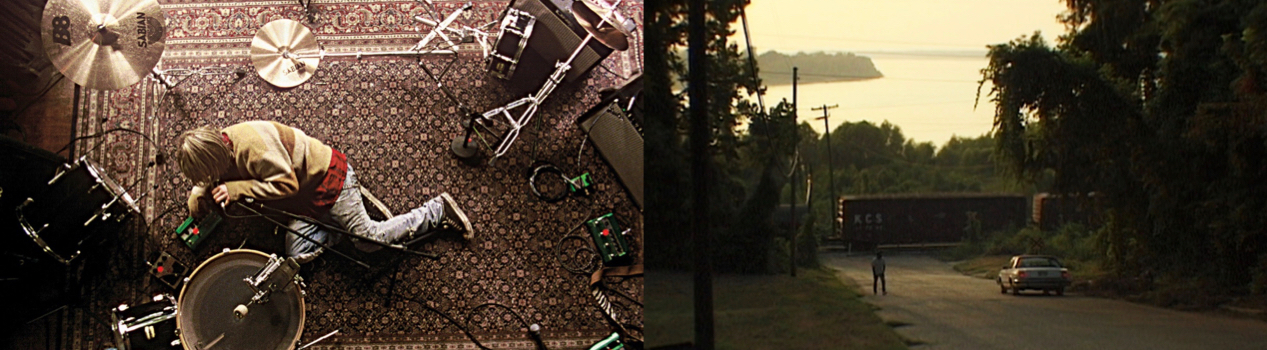
Last Days (2005) suit Blake, un musicien fictif librement inspiré de Kurt Cobain, pendant les derniers jours de sa vie. Le film n’essaie pas vraiment de l’expliquer, ni d’expliquer son histoire. Il reste simplement avec lui, observant son isolement, son silence, son corps et sa relation à la musique.
C’est l’une des choses que j’aime chez Gus Van Sant. Il ne nous dit pas exactement ce que nous devons penser de Blake. Il nous oblige à rester avec lui. On le regarde disparaître lentement, presque sans vraiment comprendre ce qui est en train de se passer.
Et puis il y a la scène finale, avec Michael Pitt dans le rôle de Blake, seul dans la serre, jouant et chantant. La caméra s’éloigne lentement de lui jusqu’à ce qu’il disparaisse presque du cadre, tandis que la musique continue. J’aime cette scène parce qu’elle donne l’impression que la dernière chose qui reste à Blake, c’est sa musique. Il disparaît de l’image.
Je serai toujours reconnaissante envers ma meilleure amie du lycée. C’est elle qui aimait tellement le cinéma et qui me l’a fait découvrir en me parlant de ses cinéastes préférés.
J’aime l’idée que Liège, cette petite ville, était elle aussi tellement cinématographique. C’est une ville un peu mystique, et je comprends aussi pourquoi The Virgin Suicides était son film préféré. Elle m’a également montré tous les films de Gus Van Sant.
Ce dernier morceau est l’un des morceaux qu’elle m’a fait découvrir grâce au film, et je le trouve magnifique.
Last Days (2005) follows Blake, a fictional musician loosely inspired by Kurt Cobain, during the final days of his life. The film doesn’t really try to explain him or his story. It just stays with him, watching his isolation, his silence, his body and his relationship to music.
This is one of the things I love about Gus Van Sant. He doesn’t tell you exactly what to think about Blake. He makes you stay with him. You watch him slowly disappear, almost without really understanding what is happening.
And then there is the final scene, with Michael Pitt as Blake, alone in the greenhouse, playing and singing. The camera slowly moves away from him until he almost disappears from the frame, while the music continues. I love this scene because it feels like the last thing Blake has left is his music. He disappears from the image.
I will always be grateful to my best friend from high school. She was the one who loved cinema so much and introduced me to it by talking to me about her favourite filmmakers.
I like the idea that Liège, this small city, was also so cinematic. It’s a slightly mystical city, and I also understand why The Virgin Suicides was her favourite film. She showed me all of Gus Van Sant’s films too.
This last track is one of the tracks she showed me from the film, and I find it so beautiful.
SUD BY CHANTAL AKERMAN
28′05″ ♪ Sound excerpt
Pour finir, nous revenons à la fin du film de Chantal Akerman, parce qu’elle m’a également appris que, pour rester présent et être capable d’éprouver de l’empathie pour ce que nous regardons, pour ce que nous lisons, nous devons nous concentrer sur les choses simples dans l’image et dans le son.
Elle m’a fait ressentir avec une telle intensité ce qu’est le cinéma, et ce qu’est l’art. La fin du film est, pour moi, une magnifique leçon sur l’image, mais aussi sur ce que nous regardons et ce que nous consommons.
Ici, nous sommes forcés de simplement écouter ces sept minutes de fin en silence, tout en empruntant la route du meurtre de Mr. Byrd, violemment fascinés et traînés le long de cette route.
To finish, we come back to the ending of Chantal Akerman’s film, because she also taught me that, in order to stay present and be able to have empathy for what we are watching, for what we are reading, we need to focus on the simple things in the image and the sound.
She made me feel so strongly what cinema is, and what art is. The ending of the film is, for me, a beautiful lesson about the image, but also about what we look at and what we consume.
Here, we are forced to simply listen to these seven minutes of ending in silence, while taking the road of Mr. Byrd’s murder, violently fascinated and dragged along this road.
 Réagir
