Chaque mois sur Kiosk Radio et Critikat, un.e invité.e partage ses bandes-son de films favorites et ses souvenirs cinéphiles. Pour ce premier épisode de The Scores : le mix de Liyo Gong, monteuse et co-fondatrice du collectif musical HE4RTBROKEN.
SUN DOG BY DORIAN JESPERS
00′00″ ♪ Sound excerpt
Cet extrait est tiré de Sun Dog, un court-métrage sur un serrurier errant dans l’hiver d’un Arctique russe fantasmagorique. Dans cette scène, une fille qu’il vient de rencontrer traduit les paroles d’une chanson d’amour en s’adressant à la caméra, sur fond de tempête de neige nocturne. J’ai appris plus tard que le réalisateur avait vécu une situation similaire lors d’une fête à Moscou, et que c’est de là qu’était née la première idée du film. J’adore ce moment d’intimité inattendu, qui surgit avec douceur au milieu d’un film plutôt taciturne et mélancolique – et j’aime le fait qu’il soit déclenché par cette musique fantôme dont on n’entend pas le son, rapportée par une inconnue.
This excerpt is taken from Sun Dog, a dreamy short film about a locksmith wandering through the Russian Arctic winter. In this scene, a girl he has just met translates the lyrics of a love song to the camera, with a nighttime snowstorm in the background. I later learned that a similar situation actually happened to the filmmaker at a party in Moscow, and it was the first spark of inspiration that gave birth to the film. I really love that moment of sudden intimacy and warmth, especially since the rest of the film is quite wordless and melancholic. I also love that it’s sparked by this unheard, ghostly music, innocently recounted by a stranger.
THE MIRROR BY ANDREI TARKOVSKY
00′52″ ♪ Pergolesi – Stabat Mater
Notre expérience du temps est par nature mystérieuse et insaisissable. Le seul moment dont on peut percevoir sensiblement la réalité est le présent ; le passé et le futur n’existent que dans notre conscience, sous forme de mémoire et de projections. Dans Le Miroir, Tarkovski “sculpte le temps” en dialogue direct avec ce grand mystère, tissant ensemble réminiscences et rêves, dissolvant présent et passé dans un flux de conscience bouleversant. Son utilisation poétique du montage y est très différente de ses autres films, ce qui rend le Miroir particulièrement précieux pour moi au sein de sa filmographie. C’est une expérience vertigineuse et spirituelle, sublimée par l’usage de musiques sacrées comme le Stabat Mater de Pergolèse.
Time is a very mysterious thing ; when you think about it, the only thing we can truly perceive as real is the present – past and future exist only in our consciousness, as memory or projection. In The Mirror, Tarkovsky “sculpts time” in a way that brings us closer to that mystery, weaving together reminiscences and dreams, merging past and present into a stream of fleeting consciousness. He uses the art of montage here in a very unique, poetic way, which is why this film is the most special to me in all his filmography. It’s a vertiginous, spiritual experience, made even more sublime by the use of sacred music, like Pergolesi’s Stabat Mater.
OUVERTURES – THE LIVING AND THE DEAD ENSEMBLE BY LOUIS HENDERSON AND OLIVIER MARBOEUF
03′43″ ♪ Sound excerpt
Ouvertures est un film collectif qui expérimente de nouvelles manières de raconter l’histoire et le présent depuis une perspective caribéenne, en s’inspirant de traditions créoles et du Spiralisme, avec pour point de départ la pièce Monsieur Toussaint d’Édouard Glissant, qui retrace les derniers jours de la vie de Toussaint Louverture, héros de la Révolution haïtienne. Je pense que l’exploration d’autres formes de récits comme celles-ci est essentielle à une réinvention décoloniale du cinéma. Dans cet extrait à l’atmosphère hallucinatoire, on peut entendre un peu de la bande originale composée par Polido, ainsi que des paroles murmurées par Louverture face à sa mort prochaine.
Ouvertures is a collective film that explores new ways of telling history and the present from a Caribbean perspective, drawing from Creole traditions and Spiralism. I think films like this are essential to the reinvention of cinema as part of a broader decolonial movement. The story is freely inspired by Edouard Glissant’s play Monsieur Toussaint, which recounts the final days in the life of Toussaint Louverture, hero of the Haitian Revolution. In this excerpt, we hear part of the original score composed by Polido, along with whispered lines by Louverture, offering a glimpse of the film’s hallucinatory atmosphere.

TABU BY MIGUEL GOMES
05′12″ ♪ Original Score by Joana Sa
Ces notes de piano, à la beauté délicate et un peu désuète, ouvrent le film sur des images fantasmées d’une Afrique filmée comme au temps du vieux Hollywood. Dans Tabou, Gomes joue sur l’ambiguïté du pouvoir de séduction du cinéma et sa capacité à créer des souvenirs illusoires. La musique composée par Joana Sa exprime à merveille ce romantisme naïf et cette nostalgie douteuse des personnages, pris dans la passion de leur histoire d’amour et aveugles au contexte colonial dans lequel ils vivent.
This beautiful piano piece opens the film over images of a fantasized, early-Hollywood-style representation of Africa. In Tabu, Gomes plays ambiguously with cinema’s seductive power and the illusory memories it can create. Joana Sa’s score, with its delicate, old-fashioned charm, perfectly captures the naive romanticism and uncomfortable nostalgia of the characters, caught up in their love story, blind to the colonial context they live in.
MYSTERIOUS SKIN BY GREGG ARAKI
07′52″ ♪ Original Score by Harold Budd & Robin Guthrie
Les bandes originales des films de Gregg Araki sont toutes incroyables, et ça a été difficile de n’en choisir qu’une pour ce mix. Ces deux morceaux proviennent de la bande son composée pour Mysterious Skin par Robin Guthrie et Harold Budd, tous deux affiliés à l’un de mes groupes préférés devant l’éternel, Cocteau Twins. Gregg Araki et Scott Heim (l’auteur du livre dont Mysterious Skin est adapté) sont eux aussi de grands fans de Cocteau Twins, ce qui a poussé Araki à inviter Budd et Guthrie à travailler sur le film. Araki a dit que cette bande originale faisait partie des « plus grandes fiertés » de sa carrière, et qu’il n’en revenait toujours pas d’avoir eu la chance de travailler avec ces deux légendes.
Gregg Araki’s soundtracks are always so perfect ! I’m honestly a bit obsessed, and it was hard to choose something for this mix. But these two tracks come from the stunning score of Mysterious Skin, composed by Robin Guthrie and Harold Budd, respectively co-founder and frequent collaborator of one of my all-time favorite bands, Cocteau Twins. Both Araki and Scott Heim (author of the book the film is based on) are huge fans of them too, which led Araki to invite Budd and Guthrie to work on the score. Araki has called it one of the “proudest achievements” of his career, and said that he still couldn’t believe he had the chance to work with these legends.
ATLANTICS BY MATI DIOP
11′44″ ♪ Original Score by Fatima Al Qadiri
Je suis également une grande fan de Fatima Al Qadiri, et j’étais particulièrement excitée de l’entendre travailler sur un film, qui plus est réalisé par Mati Diop. Elle a composé la bande originale parfaite pour cette histoire d’amour fantôme : profonde, hantée, hypnotique. Je pense que la musique est un personnage à part entière dans ce film, comme un chant lancinant de l’océan, qui porterait en lui les voix des hommes qu’il a emportés.
I’ve been a fan of Fatima Al Qadiri since day one, and I remember how excited I was to hear she’d be working on a film, especially with Mati Diop. Atlantics is as much a ghost story as it is a love story, and this score fits it perfectly : haunting, deep, trance-like. It feels like the music is almost another character in the film, as if we could hear the beautiful yet deadly song of the ocean, carrying the voices of the ghost lovers lost to the sea.

SHARASÔJU BY NAOMI KAWASE
16′51″ ♪ Sound excerpt
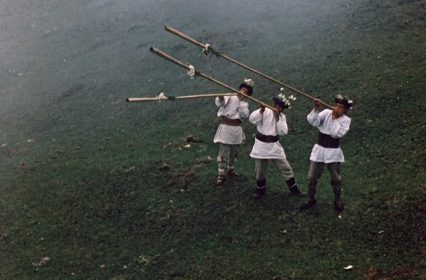
Cet extrait provient d’une des plus belles scènes de climax que j’aie jamais vue, qui se passe lors d’une parade de printemps au festival traditionnel de Basara, dans la ville natale de Naomi Kawase. C’est un moment de pure célébration et de communion, où les chants et la danse prennent la dimension d’une prière pour la vie et le renouveau. L’euphorie, le chaos d’une pluie soudaine, le rythme hypnotique des chants… tout est terriblement beau, et la tristesse et les émotions réprimées qui pesaient sur les personnages tout au long du film trouvent ici un exutoire éclatant.
This excerpt is from one of the most exhilarating climactic scenes I’ve ever seen, which takes place during a spring parade at the traditional Basara festival in Naomi Kawase’s hometown. This moment feels like a musical prayer for life and rebirth, an ancestral celebration of community through chant and dance. The euphoria, the chaos of the sudden rainfall, the hypnotic rhythm of the chants… I just find it all so beautiful. It’s as if the long-suppressed, heavy-hearted emotions that run throughout the film can finally erupt here.
THE FITS BY ANNA ROSE HOLMER
18′56″ ♪ Original Score by Danny Bensi & Saunder Jurriaans
Dans ce long plan-séquence d’anthologie, le personnage principal un peu garçon manqué, Toni, traverse un pont en improvisant une danse avec des mouvements appris à la boxe. Elle invente sa propre féminité, dans ce moment de passage métaphorique entre l’enfance et l’adolescence. J’aime beaucoup l’atmosphère inquiétante que Danny Bensi et Saunder Jurriaans ont créée, avec ces percussions minimalistes et ces cuivres entêtants.
In this anthology sequence of The Fits, the main character, a young tomboy named Toni, crosses a bridge in a beautiful long take, inventing her own body language somewhere between boxing and dancing. She’s exploring girlhood and femininity on her own terms, in what feels like a turning point in her coming of age. I love the score by Danny Bensi and Saunder Jurriaans, with its minimal, spooky beats and hypnotic brass.
BLADE BY STEPHEN NORRINGTON
19′40″ ♪ Ni-Ten-Ichi-Ryu (Two Sword Technique) – Photek
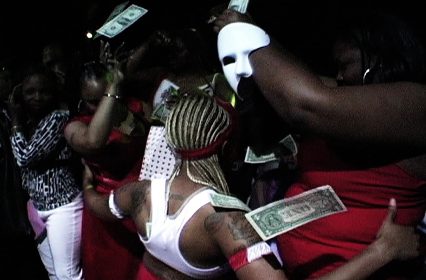
Blade est juste un film extrêmement stylé, un Matrix avant l’heure mais avec des vampires, ce qui sonne quand même très engageant. La scène d’ouverture est une des rares bonnes scènes de club, le club étant un espace très dur à capturer au cinéma. La bande-son est un mélange de tout ce qu’il y avait de plus cool à l’époque, avec notamment des morceaux de DJ Krush, et ce morceau de Photek extrêmement stylé aussi.
Blade is just such a cool film. It had The Matrix-level hype before The Matrix, but make it vampire. The opening scene is, in my opinion, one of the few truly great club scenes in cinema – and clubs are notoriously hard to shoot in interesting ways. The soundtrack is a wild mix of everything cool from that era, including tracks by DJ Krush and this great cut by Photek.

THE VIRGIN SUICIDES BY SOFIA COPPOLA
23’06′ ♪ Original Score by Air
J’ai vu The Virgin Suicides à sa sortie, quand j’étais encore moi-même pré-adolescente, et découvrir ce film à cet âge-là a été bouleversant. Je pense que c’est un de mes premiers grands souvenirs de cinéma. J’ai découvert que la beauté, l’atmosphère et le mystère d’un film pouvaient m’obséder de façon indicible pendant des mois, sans que mon cerveau puisse le traiter ou l’exprimer d’une autre manière que dans le langage du cinéma. Je n’ai pas forcément une connexion aussi forte avec le reste de la filmographie de Sofia Coppola, mais The Virgin Suicides et sa bande son iconique composée par Air – que j’avais téléchargée sur eMule et par laquelle j’étais aussi complètement obsédée – incarnent un moment très précieux de mon initiation au cinéma.
I was a young teenager when The Virgin Suicides came out in theaters, and watching it at that age was a profound experience, I remember being shaken to the core. It was probably one of my first truly important cinema moments. I realized that films could touch me in a completely unspeakable way, that the mystery, beauty, and atmosphere of a film could stay with me for months in a way that my brain couldn’t process in any language other than that of cinema. I don’t connect as much with the rest of Sofia Coppola’s work, but The Virgin Suicides – and its gorgeous score by Air, which I instantly downloaded on eMule and listened to on repeat for months – still represents a precious moment in my discovery of cinema.
EAT THE NIGHT BY CAROLINE POGGI & JONATHAN VINEL
27’33’’ ♪ Generated Tons by ssaliva feat City
Cette folle ascension d’arpeggios composée par ssaliva et City colle parfaitement avec l’esthétique maximaliste et le parti pris radicalement emo de Eat The Night. La musique de ssaliva a toujours quelque chose de pur et direct, comme si le geste initial restait apparent et central dans chaque morceau, elle a une énergie brute mais avec des mélodies très éthérées et mélancoliques, ce qui résonne beaucoup avec ce film. La fin désaccordée de ce morceau tombait aussi parfaitement pour introduire l’extrait suivant de ce mix.
This crazy arpeggio escalation, composed by ssaliva and City, fits perfectly the maximalist, unapologetically emotional tone of Eat The Night. I love how ssaliva’s music feels very pure and direct, as if the original creative gesture carries through the whole production process. It keeps a raw and sincere energy, while still creating melodies that have this melancholic, incandescent glow, which resonates very well with this film. And the detuned ending of the track is actually a serendipitous coincidence, the perfect intro to the next excerpt in this mix.
HYMN OF THE PLAGUE BY ATAKA51
29’46’’ ♪ Sound excerpt
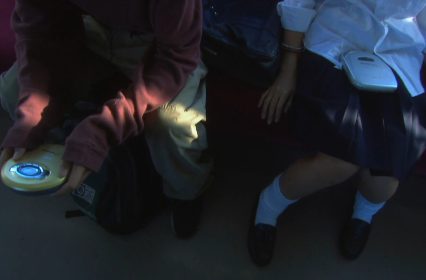
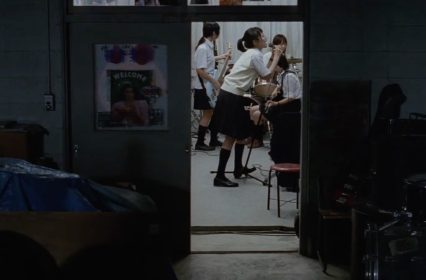
Mes parents ont travaillé pendant plus de 30 ans comme violonistes dans un orchestre, et j’ai grandi en entendant cette belle cacophonie d’instruments qu’on accorde, juste avant leurs répétitions ou leurs concerts. J’étais choquée quand j’ai entendu Hymn Of The Plague commencer par ce même son, le film se passant dans un studio d’enregistrement où un orchestre s’apprête à jouer. Le premier personnage qu’on voit est un petit garçon qui joue dans le couloir à côté du studio, ce qui m’a aussi rappelé les heures passées à m’occuper en coulisses quand j’étais enfant. On l’entend ici réciter un extrait de la pièce Le Festin en temps de peste de Pouchkine, dont l’orchestre essaie d’enregistrer une version musicale avant d’être lui-même emporté par un fléau mystérieux. Hymn Of The Plague est un impressionnant petit tour de force réalisé par un collectif de jeunes réalisateurs russes appelé Ataka51, que j’ai découvert avec bonheur à Locarno l’année passée.
My parents were violinists in an orchestra for more than 30 years, and I grew up hearing the beautiful cacophony of tuning instruments before every rehearsal or concert they brought me to. Hymn of the Plague opens with that exact same sound, since it takes place in a recording studio where an orchestra is about to begin. When I heard it, it struck a deeply personal chord. The first character we see is a little boy playing in the hallway outside the studio, which also reminded me of the countless hours I spent trying to entertain myself backstage as a child. The poem we hear him read is from Pushkin’s A Feast in Time of Plague, as the orchestra attempts to record a new composition inspired by the play – but they, too, get consumed by a mysterious Plague. Hymn is a masterfully crafted short film made by a Russian filmmakers’ collective called Ataka51, which I discovered at Locarno last year and fell in love with.

LUMAPIT SA AKIN, PARAISO BY STEPHANIE COMILANG
31’58’’ ♪ Original score by Why Be, SKY H1 and Elysia Crampton
Ce film de science-fiction documentaire sur la communauté philippine de Hong Kong a bénéficié d’un casting cinq étoiles de musicien.nes pour sa bande-son : Why Be, SKY H1 et Elysia Crampton. D’après Tobias Lee (Why Be), iels voulaient créer quelque chose d’irréel et hors du monde, tout en gardant une sonorité intime et émotionnelle. J’écoute beaucoup cette bande-son, et j’avoue que je l’ai souvent utilisée comme référence pour des films que je montais.
This science-fiction documentary about the Filipino community in Hong Kong features a five-star cast of music producers : Why Be, SKY H1, and Elysia Crampton. As Tobias Lee (Why Be) put it, they wanted the score to sound otherworldly, while still holding onto a certain emotional or intimate sensitivity. I listen to this soundtrack a lot, and often use it as a reference for films I work on.
ME YOU AND EVERYONE WE KNOW BY MIRANDA JULY
36’00’’ ♪ Original score by Michael Andrews
J’ai vu Me, You and Everyone We Know il y a longtemps lors de sa sortie, et j’en garde le souvenir d’un film plein de moments affreusement mignons, contrebalancés par une lucidité un peu cruelle sur les relations humaines, et la scène de fin m’avait particulièrement fait fondre. Sans spoiler, je dirai juste qu’elle implique un petit garçon qui finit par résoudre un mystère qui le tourmentait, un beau lever de soleil orange-rose et un pouvoir magique. Le thème musical composé par Michael Andrews, qui revient timidement tout au long du film, prend finalement toute son ampleur sur ces dernières images.
I saw Me and You and Everyone We Know a long time ago when it was released in theaters, and I remember it as a lovely film full of unbearably cute moments, balanced by a touch of lucid cruelty. The final scene left me in awe, and without spoiling it, I’ll just say that a little boy finally solves a mystery he’s been trying to figure out since the beginning of the film, and it involves a pink-orange sunrise and a wholesome magical power. Fittingly, Michael Andrews’ theme, which plays throughout the film, finally reaches its beautiful climax here.
GUMMO BY HARMONY KORINE
39’53’’ ♪ Roy Orbison – Crying
Ma chanson de karaoké ultime est aussi la musique de fin de Gummo. Je voulais donc finir ce mix de de la manière la plus épique qui soit, sur le son déchirant d’un cœur brisé.
My ultimate go-to karaoke song also happens to be the closing track of Gummo. It’s just perfect ! I couldn’t resist ending the mix on this heartbreakingly epic note.

 Réagir