

Chaque mois sur Kiosk Radio et Critikat, un.e invité.e partage ses bandes-son de films favorites et ses souvenirs cinéphiles. Pour ce deuxième épisode de The Scores : le mix de Lagrima, musicien basé à Paris. Il est notamment compositeur de musique de films et co-organisateur du festival Sachô.
ERIE BY KEVIN JEROME EVERSON
00′00″ ♪ Sound excerpt
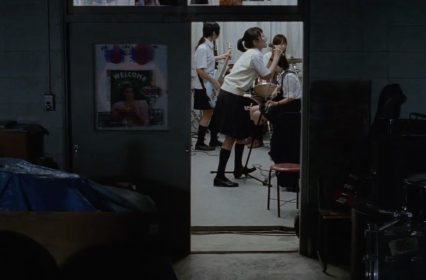
Le festival Cinéma du Réel dédiait, il y a quelques années, une rétrospective au travail de Kevin Jerome Everson,où j’avais pu découvrir Erie. Le film consiste en une série de plans-séquences, filmés dans les communautés ouvrières afro-américaines autour du lac Erie. Cet extrait se déroule dans une sorte de MJC locale où deux ados travaillent une chanson sur un piano désaccordé. De l’autre côté de la pièce, d’autres jeunes dansent le krump. Je suis vraiment curieux de savoir s’iels ont fini leur chanson.
I discovered Kevin Jerome Everson’s work at a retrospective dedicated to him at documentary festival Cinéma du Réel. “Erie” consists of a series of long shots, filmed in the afro-american working class communities living around Lake Erie. This excerpt comes from a scene shot in some kind of community center, where two teenagers are working on a song on an out-of-tune piano. On the other side of the room, other kids start dancing krump. I would be really curious to hear the song if they finished writing it !
BELLY BY HYPE WILLIAMS
02′05″ ♪ Soul II Soul — Back to Life (However Do You Want Me)
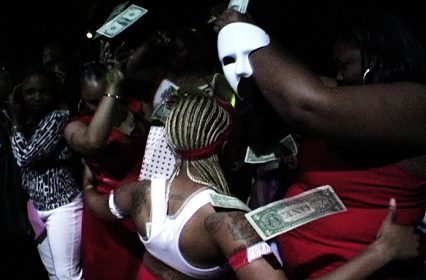
J’ai vu Belly à l’adolescence, intrigué par la présence au casting (et à l’écriture) du rappeur Nas, que j’idolâtrais. Ce n’est que bien plus tard que je me suis rendu compte qu’il s’agissait d’un film du fameux réalisateur de clips Hype Williams. Et cela paraît logique quand on voit cette belle scène d’intro : lumière bleue, ralentis, stroboscopes et un long acapella de Soul II Soul, en lévitation. Petit easter egg : cette scène où Nas et DMX tombent sur Gummo à la télé, comme pour faire le lien avec l’épisode 1 de The Scores.
I first saw “Belly” during my teenage years, intrigued by the presence of Nas amongst the cast. It’s much later that I realized it was directed by Hype Williams, director of numerous rap music videos. And it makes a lot of sense when you see that introduction scene : the club, the black light, the strobes and this long acapella of Soul II Soul — an intense, dreamlike moment. Little Easter egg : this scene where DMX and Nas are watching “Gummo” on TV, to connect the dots with the first episode of The Scores.
ANTONYMS OF BEAUTY BY KHALIK ALLAH
05′30″ ♪ Nas & Large Professor — One Plus One
Dans Antonyms of Beauty, Khalik Allah s’installe à un coin de rue de Harlem et prend des clichés des passant·es. Le film est un mélange de sons, photographies et bouts de rushes qui semblent avoir leurs existences propres. A un moment, il accueille un personnage dans sa voiture pour lui faire écouter ce morceau de Nas (encore lui) et sa réaction vaut le détour.
In “Antonyms of beauty”, Khakik Allah sets himself on a street corner in Harlem and starts taking shots and talking to the people passing by. The film is a mix of moving images, stills and sound that all seem to exist on their own, capturing the essence of the neighborhood. At some point, he welcomes a man in his car and starts playing this tune (by Nas once again) for him, and his reaction is quite unexpected.

LIGHTNING DANCE BY CECILIA BENGOLEA
07′40″ ♪ Sound Excerpt
J’ai découvert cette vidéo de la chorégraphe argentine Cecilia Bengolea pendant le confinement, grâce à un post de Nicole Brenez sur le groupe Facebook « La Loupe » dont certain·es se souviendront. Le son étouffé de la pluie, du tonnerre, les basses du dancehall. Il n’en fallait pas plus pour me transporter dans la forêt jamaïcaine, auprès de ces captivant·es danseur·euses.
I discovered this video by Argentinian choreographer Cecilia Bengolea during the first covid lockdown, thanks to a post from Nicole Brenez on the Facebook group “La Loupe” where people would share films. The muffled sounds of the rain, thunder, and dancehall basses took me straight to the Jamaican forest with these captivating dancers.
SYNDROMES AND A CENTURY AND MEMORIA BY APICHATPONG WEERASETHAKUL
08′51″ ♪ Koichi Shimizu — Reverberation — ♪ Memoria sound excerpt
D’une forêt caribéenne à celle de Thaïlande, il n’y a qu’un petit pas, comblé par Apichatpong Weerasethakul. Ici dialoguent la musique de Syndromes and a century et les sons rêvés par Tilda Swinton en errance en Colombie dans Memoria.
From a Caribbean forest to one in Thailand, it’s only a small step – bridged here by Apichatpong Weerasethakul. Here, the music from Syndromes and a Century enters into dialogue with the sounds dreamt by Tilda Swinton as she drifts through Colombia in Memoria.
KAZUKO — AN ABANDONED TUNNEL BY PHAROAH SANDERS
12′22″
Je me permets de sortir un peu de la consigne pour cet extrait, tant cette vidéo de Pharoah Sanders jouant du saxophone dans un tunnel me paraît revêtir une grâce cinématographique. Dans un plan séquence qui suit sa traversée, la reverb naturelle du lieu mélange le son du saxophone et de l’harmonium qui l’accompagne et crée une magnifique densité sonore.
I’m taking a bit of liberty with the rules for this one, as this video of Pharoah Sanders playing saxophone in a tunnel carries such cinematic grace. In a long take following his walk through the space, the natural reverb of the tunnel blends the sound of the saxophone with the harmonium that accompanies it, creating a rich and textured sonic atmosphere.

MILLENNIUM ACTRESS BY SATOSHI KON
16′07″ ♪ Susumu Hirasawa — Lotus Gate (Landscape 1)
Les musiques de Susumu Hirasawa accompagnent la plupart des films de Satoshi Kon, et leur étrangeté convient parfaitement à l’univers non conventionnel du réalisateur. J’avais d’abord pensé inclure un morceau de la bande-son délirante de Paprika, mais je lui ai préféré un extrait de celle du moins connu Millennium Actress, qui évoque l’histoire du Japon à travers le cinéma et un très joli personnage d’actrice.
Susumu Hirasawa’s music accompanies most of Satoshi Kon’s films, and its strangeness fits perfectly with the director’s unconventional world. I initially considered including a track from the delirious “Paprika” soundtrack, but I ended up choosing this one from the lesser-known “Millennium Actress”, which traces the history of Japan through cinema and a beautiful actress character.
THE CONVERSATION BY FRANCIS FORD COPPOLA
20′22″♪ Sound excerpt
Un autre film où le son a un rôle narratif central. J’adore voir Gene Hackman manipuler le son et les EQ comme un DJ sur une table de mixage vintage. Au fur et à mesure des manipulations, les paroles s’éclaircissent mais le mystère s’épaissit…
Another film where sound plays a central narrative role. I love watching Gene Hackman manipulate audio and EQ like a DJ on a vintage mixing desk. As he tweaks and adjusts the tapes, the voices become clearer, but the mystery thickens…
COWBOY BEBOP BY SHIN’ICHIRO WATANABE
21′14″ ♪ The Seatbelts — Fingers
Si j’aime autant Cowboy Bebop, ce n’est pas vraiment pour ses personnages, sa mélancolie ou ses questionnements philosophiques. C’est surtout car rarement je n’avais vu une œuvre réussir à mélanger autant de styles et références aussi fortes, avec une telle réussite : cyberpunk, western, cinéma d’action hongkongais, jazz, Neo-noir… Tout cela donne vie à un univers fascinant et une des plus belles réussites esthétiques de l’animation japonaise. Derrière le groupe The Seatbelts se cache la compositrice Yoko Kanno, aussi connue pour la BO de Ghost in the Shell. Je trouve ce morceau extrait de l’intro du film de 2001 particulièrement obsédant.
What I love most about Cowboy Bebop isn’t so much the characters, the melancholy, or the philosophical undertones. It’s the sheer success of its genre-blending – I’ve rarely seen a work mix such strong styles and references so well : cyberpunk, western, Hong Kong action cinema, jazz, neo-noir… It creates a fascinating universe and stands as one of the most aesthetically accomplished pieces of Japanese animation. Behind The Seatbelts is composer Yoko Kanno, also known for her “Ghost in the Shell” soundtrack. I find this track, taken from the intro of the 2001 film, particularly haunting.

DESTINY DELUXE BY DIOGO BALDAIA
23′32″ ♪ Sound excerpt
Ce joli court-métrage de Diogo Baldaia, jeune réalisateur portugais, fourmille d’idées formelles, de modulation des sons et des images, entre monde réel et digital. Dans la scène d’intro, un jeune homme se fait aspirer par un fond vert. Ici, une jeune femme chante dans un ventilateur. La séquence se poursuit avec une sorte de karaoké spontané, sur la chanson « Não Queres entrar » de Sallim, et une séquence de plage où l’océan nous porte de l’autre côté de l’Atlantique.
This beautiful short film by Diogo Baldaia, a young Portuguese filmmaker, overflows with formal invention and modulation of sound and image, somewhere between the real and the digital world. In the opening scene, a young man is sucked into a green screen. Here, a young woman sings into a fan. The sequence continues with a kind of spontaneous karaoke over the song “Não Queres Entrar” by Sallim, followed by a beach scene where the ocean takes us to the other side of the Atlantic.
OBSCURRO BARROCO BY EVANGELIA KRANIOTI
25′43″ ♪ Sound Excerpt
« Ville eden, ville enfer, ville purgatoire ». Cette évocation du carnaval de Rio par Evangelia Kranioti est un puissant mélange de couleurs, de sons, de paillettes et de plumes. Elle s’élève au dessus de la ville avec un personnage de clown triste, pendant qu’un autre, Luana Muniz, figure transgenre emblématique de Rio commente sa dualité, sa métamorphose constante.
“Eden city, hell city, purgatory city”. Evangelia Kranioti’s take on the Rio carnival is a powerful blend of colors, sounds, glitter and feathers. In this stunning scene, she goes above the city with one her two characters, a sad introvert clown, while the other, Luana Muniz, an iconic transgender figure of Rio, comments on its duality, its constant metamorphosis.

LOST IN TRANSLATION BY SOFIA COPPOLA
28′22″ ♪ My Bloody Valentine — Sometimes
Sans le savoir, en visionnant Lost in Translation en famille en 2003 à l’UGC Rosny, j’entendais pour la première fois la musique de Squarepusher, My Bloody Valentine, Air… Cette dérive nocturne dans Tokyo, à l’arrière d’un taxi, au son de MBV, restera sans aucun doute une image séminale de mon enfance.
Without realizing it, when I watched “Lost in Translation” with my family back in 2003 at UGC Rosny, it was the first time I ever heard music by Squarepusher, My Bloody Valentine, Air… That nighttime drift through Tokyo, in the back of a taxi, with MBV playing, will no doubt remain a seminal image of my childhood
LIKE SOMEONE IN LOVE BY ABBAS KIAROSTAMI
32′38″ ♪ Sound excerpt
Quitte à passer un moment à Tokyo à l’arrière d’un taxi, autant y rester un moment. J’ai été transpercé en plein cœur par cette scène bouleversante de Like Someone in Love, peut-être l’une des plus belles du cinéma de Kiarostami, pourtant dans un film peut-être moins marquant.
If I’m going to spend a moment in the back of a taxi in Tokyo, I might as well stay a little longer. This scene from “Like Someone in Love” completely broke my heart — perhaps one of the most beautiful in Kiarostami’s cinema, even if the film itself might not be one of his most memorable.

YI YI BY EDWARD YANG
33′44″ ♪ Sound excerpt
Pour accompagner cette fin de trajet dans Tokyo, le piano un peu jazz, un peu mélancolique de Kaili Peng, composé pour Yi Yi d’Edward Yang, un film qui m’émeut toujours un peu plus à chaque visionnage. A l’arrivée, des retrouvailles avec un amour de jeunesse et une escapade de quelques jours au Japon, en se demandant « et si ? ».
For the final stretch of this Tokyo cab ride : the somewhat jazzy, slightly melancholic piano of Kaili Peng, composed for Edward Yang’s “Yi Yi” — a film that moves me a bit more every time I watch it. At the end of the road : a reunion with a young love and a brief escape to Japan, thinking “what if”.
NIGHT ON EARTH BY JIM JARMUSCH
35′00″ ♪ Sound excerpt
Direction New-York maintenant, pour l’une des séquences de ce film tour-du-monde de Jim Jarmusch. La bande originale signée Tom Waits introduit chaque ville comme un personnage, avec des instruments qui lui sont propres : guitares électriques dissonantes à LA, nappes d’accordéon à Paris… À New-York, c’est saxophone et sirènes de police. Un peu dans le cliché mais avec pas mal de style quand même.
Now we head to New York, for one of the sequences from Jim Jarmusch’s globe-trotting film. The original score by Tom Waits introduces each city like a character, with its own instruments : dissonant electric guitars in LA, accordion textures in Paris… In New York, it’s saxophone and police sirens. A bit cliché, sure — but with a lot of style nonetheless.
GLORIA BY JOHN CASSAVETES
36′18″ ♪ Bill Conti — Main Title
Comme il semble difficile de trouver un taxi, Cassavetes choisit directement de prendre l’hélicoptère pour s’envoler au-dessus de New York. La guitare classique, les tableaux, puis les bâtiments de la ville, le saxophone et les cordes si mélodramatiques, rarement une ouverture de film ne m’aura donné autant de frissons.
Since it seems so hard to find a taxi, Cassavetes just goes straight for the helicopter, flying over New York. Classical guitar, paintings, then the city’s buildings, the saxophone and those melodramatic strings — rarely has a film opening given me such chills.

RISKY BUSINESS BY PAUL BRICKMAN
38′22″ ♪ Belmont Girl — Love on a Real Train
Une bande-son mémorable pour un film plutôt oubliable. Petit twist, j’ai préféré ici la version edit de Belmont Girl (aka Malibu) à l’originale de Tangerine Dream.
A memorable soundtrack for a rather forgettable film. Small twist : here, I preferred the edited version of Belmont Girl (aka Malibu) to the original by Tangerine Dream.
THE COOL WORLD BY SHIRLEY CLARKE
41′55″ ♪ Sound excerpt
Assez méconnue de l’internationale cinéphile, la cinéaste Shirley Clarke fait pourtant partie des figures majeures du cinéma d’avant-garde américain des années 60. Dans The Cool World, elle s’intéresse à la communauté noire de Harlem et mélange fiction et nombreuses séquences documentaires. La musique dirigée par Dizzy Gillespie accompagne les pensées du personnage principal, comme une sorte de proto-spoken work où le vocabulaire, le phrasé, le rythme ont déjà toute leur importance.
Relatively unknown to the global film-lovers, filmmaker Shirley Clarke is nonetheless one of the major figures of American avant-garde cinema in the 1960s. In “The Cool World”, she dives into the Black community of Harlem and mixes fiction and documentary sequences. The music, led by Dizzy Gillespie, blends smoothly with the thoughts of the main character, like a kind of proto-spoken word where vocabulary, phrasing, and rhythm already hold great importance.
ELLIS ISLAND BY MEREDITH MONK
43′53″ ♪ Original score by Meredith Monk
Ellis Island est une courte installation vidéo réalisée par la grande chanteuse et compositrice Meredith Monk. Cette pièce de piano, simple et belle, accompagne les flux d’immigrant·es au pied de la Statue de la Liberté. Le contraste avec le montage ludique rend cette installation assez surprenante.
“Ellis Island” is a short video installation made by the great singer and composer Meredith Monk. This simple and beautiful piano piece gives gravity to the images that are being edited in a really playful manner. Though quite simple, this balance between images and music makes this installation quite surprising.
VENDREDI SOIR BY CLAIRE DENIS
46′23″ ♪ Jeff Mills — Entrance to Metropolis
Jeff Mills a composé ce thème en s’inspirant du film de Fritz Lang. Il a d’ailleurs remis intégralement en musique le film par la suite. Mais c’est surtout pour son utilisation par Claire Denis au début de Vendredi soir que j’ai voulu l’évoquer. Sur les toits de Paris au crépuscule, un ciel rouge sous la Tour Eiffel, ça doit être ça, la nouvelle Metropolis.
Jeff Mills drew inspiration for this theme from Fritz Lang’s film. In fact, he later re-scored the entire film. But it’s especially for its use by Claire Denis at the beginning of “Vendredi soir” that I wanted to mention it. On the rooftops of Paris at dusk, a red sky beneath the Eiffel Tower — it must be the new Metropolis.

HEAT BY MICHAEL MANN
48′39″ ♪ Moby — God Moving over the face of the waters
Après avoir passé en revue un certain nombre de moyens de transport, il fallait bien finir dans un aéroport. Le duel final de Heat au milieu des avions et le morceau de Moby — à la fois élégie ambiante et crescendo spirituel- ne pouvaient pas manquer à l’appel.
After reviewing a number of means of transport, it was only fitting to end up in an airport. The final duel in “Heat” among the planes, Moby’s track — part ambient elegy, part spiritual crescendo — were a quite obvious choice.
STRANGE DAYS BY KATHRYN BIGELOW
52′52″ ♪ Deep Forest & Peter Gabriel — While the Earth sleeps
C’est le passage à l’an 2000 et le chaos dans les rues. Pour tourner cette scène de liesse, la production a organisé une rave, avec Aphex Twin et Deee-Lite en headliners. Les tickets coûtaient 10$, nourriture et boissons étaient offertes. 14000 personnes sont venues. Marrant comme tous ces petits points de couleur semblent préfigurer l’avènement d’un millénaire digital.
For the huge crowd scene at the end of the film « Strange Days,» director Kathryn Bigelow threw a rave, headlined by Aphex Twin and Deee-Lite. Tickets were $10. Food and drink was free. 14,000 people showed up. All these little color dots on the screen seem to announce the coming of a new digital era.

LOTUS BY CONI BEESON
56′41″ ♪ Sound excerpt
Un petit poème filmé, en douceur et sensualité, avec sa ritournelle ambient qui pourrait durer à l’infini. Pour redescendre en douceur.
A little filmed poem, gentle and sensual, with its ambient refrain that could last forever. To gently bring you back down.
 Réagir